

Product
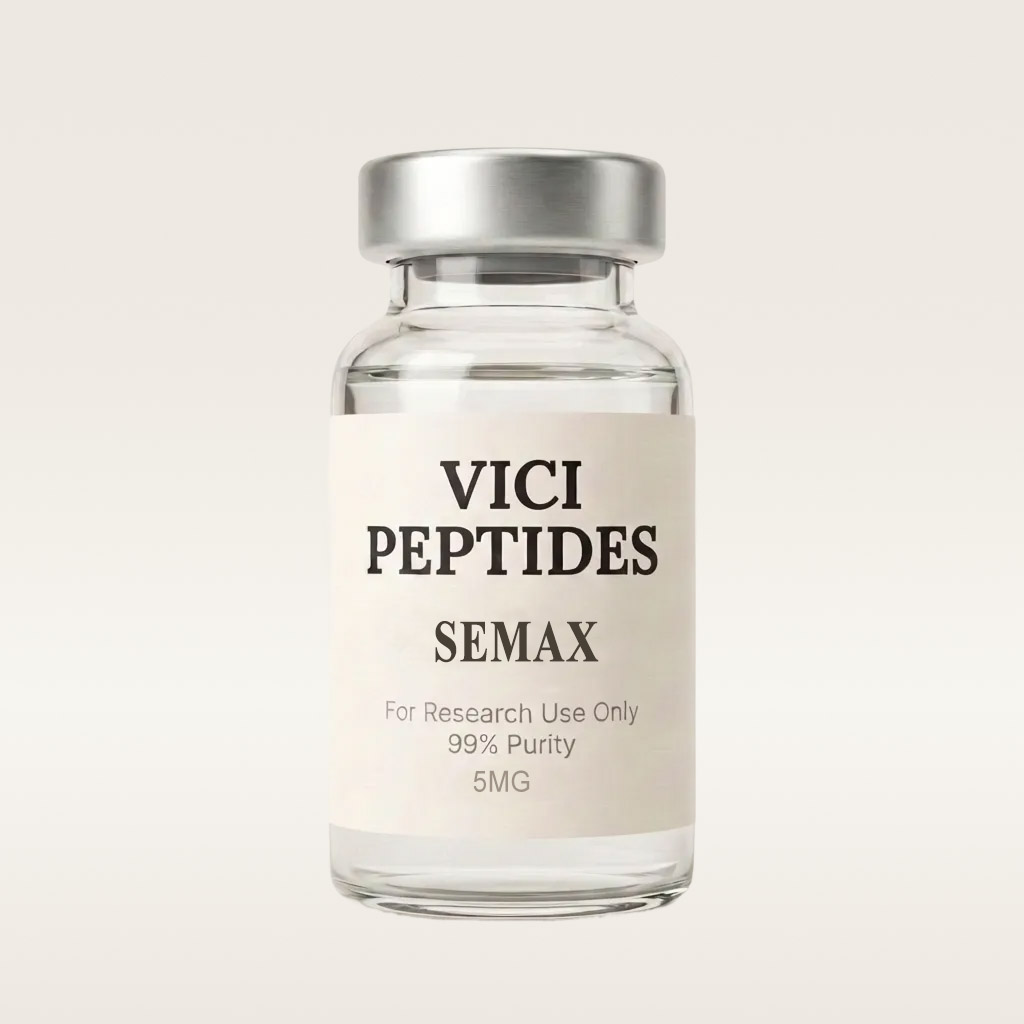
semax
Price range: $40.00 through $70.00
semax
Semax is a synthetic heptapeptide (Met-Glu-His-Phe-Pro-Gly-Pro) generated from the N-terminal segment of adrenocorticotropin (ACTH 4-10).
This peptide, created specifically for laboratory research, has neurotrophic, neuroprotective, and cognitive-enhancing characteristics without major hormonal activity.
Unlike the parent ACTH molecule, Semax has no corticosteroid-stimulating effects, making it an ideal research tool for researching neuroplasticity, cerebral circulation, and neural repair mechanisms.
Each lyophilized vial is generated with ≥98% purity, as confirmed by independent HPLC and mass spectrometry.
Semax is used by researchers to study BDNF and NGF upregulation, antioxidant enzyme activity, and recovery after ischemia or hypoxic injury in preclinical models.
Key Features:
High purity: ≥98%, validated by third-party HPLC analysis.
ACTH (4-10) Analogue maintains neurotrophic effects without corticosteroid activity.
Neuroprotective properties include reduced oxidative stress and excitotoxicity in study models.
Lyophilized format provides easy reconstitution for cell culture or preclinical research.
For research purposes only; not for human consumption, clinical usage, or medicinal applications.
Specifications:
Molecular Formula: C₃₇H₅₁N₉O₁₀.
Molecular Weight: 781.85 g/mol.
Sequence: Met-Glu-His-Phe-Pro-Gly-Pro.
Purity: >98% (HPLC)
White lyophilized powder with a storage temperature of -20°C and protection against light and moisture.
Store (reconstituted) at 2-8°C for up to 7 days; aliquot for prolonged storage.
Research Applications:
Semax is commonly used in preclinical investigations investigating:
Ischemic and hypoxic injuries include stroke models, cerebral ischemia, and oxygen-glucose deprivation (OGD).
Neuroprotection targets excitotoxicity, oxidative stress, and mitochondrial preservation.
Cognitive enhancement for rodent models includes improved learning, memory consolidation, and attention.
Neurotrophic Factor Research: Expression of BDNF, NGF, and GDNF in hippocampus and cortical tissues.
Retinal Neuroprotection for Glaucoma and Optic Nerve Crush Models.
Parkinson’s Disease Models: Preserving dopaminergic neurons after MPTP-induced damage.
Research Applications:
Ischemic and hypoxic injuries include stroke models, cerebral ischemia, and oxygen-glucose deprivation (OGD).
Neuroprotection targets excitotoxicity, oxidative stress, and mitochondrial preservation.
Cognitive enhancement for rodent models includes improved learning, memory consolidation, and attention.
Neurotrophic Factor Research: Expression of BDNF, NGF, and GDNF in hippocampus and cortical tissues.
Retinal Neuroprotection for Glaucoma and Optic Nerve Crush Models.
Parkinson’s Disease Models: Preserving dopaminergic neurons after MPTP-induced damage.
Quality Assurance:
HPLC purity verification: ≥98% with complete chromatographic trace.
Mass Spectrometry Confirmation: Molecular Weight Validated (ESI-MS)
Endotoxin testing: <1 EU/mg to ensure cell culture compatibility.
Batch tracking includes Certificate of Analysis for each lot.
Additional Information
| choose an option | 5mg, 10mg |
|---|
Related products
KPV
Tirzepatide
TESAMORELIN
Reviews
There are no reviews yet.